
What Survives the Storm
When life rearranges itself around you

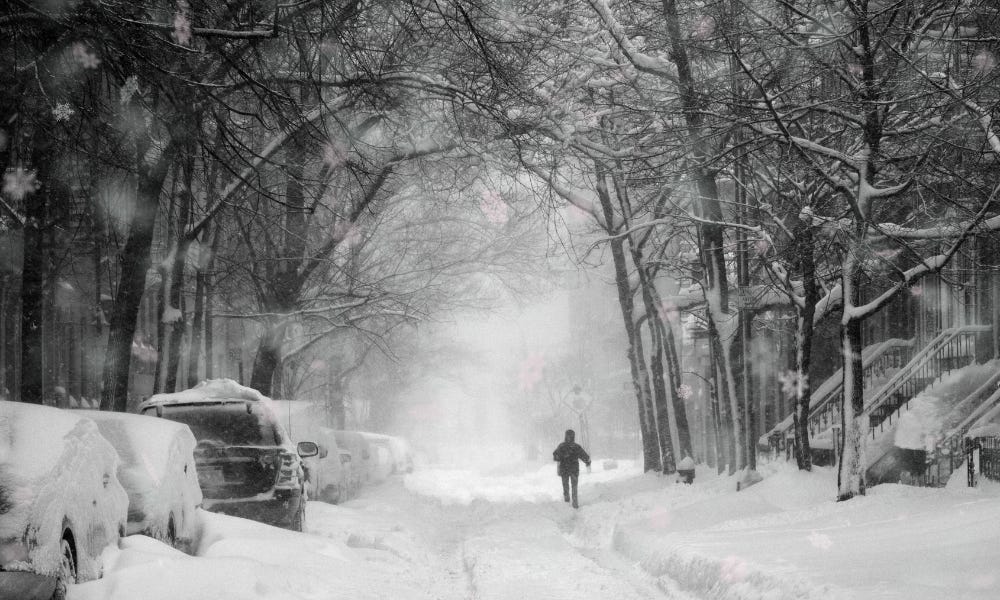
When the power went out last winter, the silence startled me more than the dark. No hum of the refrigerator, no low whir of the furnace—just the wind rattling the windows. I lit candles and waited for the world to steady itself again.
It struck me how fragile ordinary life is, how much depends on things we never think about until they stop working. In the quiet, I began to wonder whether strength really means holding everything together—or simply trusting that not everything has to stay intact.
We like to think of resilience as endurance: the ability to keep moving, to stay productive, to push through. But maybe that’s not resilience at all. Maybe we do all of those things because of the fear of falling apart.
The Myth of Endurance
For a long time, I equated resilience with doing more. After illness, after creative burnout, after every disruption that knocked the air out of me, my instinct was to fix things. Keep the plates spinning. Smile. Deliver the work.
From the outside, I looked capable. Inside, I was fraying. I told myself that strong people adapt, that if I just organized my life better—new planner, new schedule, new morning routine—I could stay ahead of the chaos.
But storms don’t care about plans. They sweep through anyway, scattering whatever you tried to keep in neat piles. And when the wind finally calms, you realize endurance is not the same thing as resilience.
Endurance survives by tightening its grip.
Resilience survives by letting go.
Redefining Resilience
Over time, I learned that what survives the storm isn’t what’s toughest, what’s rigid. No, to survive the storm you need to be able to bend.
When I returned to drawing after years away, I didn’t intend to reinvent anything. I just needed a quiet place to land. Sketching became a pause, a way of breathing again. From that small act of stillness, my creative life began to expand in ways I couldn’t have forced if I’d tried.
I see this lesson every time I help a client tell their story. Their defining moments are rarely about triumph in the traditional sense. More often, they’re about the cracks—what happens when the old way of living no longer fits and they have to let it break.
Resilience, it turns out, isn’t about bouncing back to who you were. It’s about allowing yourself to become someone new.
What Remains
When a storm passes, the landscape never looks the same. Trees have lost branches, fences have toppled, the ground is littered with debris—but look closer. Beneath the wreckage, the roots are still there. The soil has shifted, but it’s richer now.
That’s what resilience really leaves behind: nourishment.
The courage to grow differently next time.
The humility to accept help.
The wisdom to rest before the next wind rises.
In storytelling, we recognize this instinctively. Every good narrative has a turning point—the moment when everything falls apart so something essential can emerge. The character we meet after the storm isn’t the same person who faced it. She’s softer in some places, stronger in others, clearer about what truly matters.
Life works the same way.
After the Storm
Maybe resilience isn’t about bouncing back at all. Maybe it’s about growing roots deep enough to hold us steady while the world rearranges itself around us.
Because storms will come. Careers will shift, relationships will change, health will falter, creativity will ebb. But there will always be something that endures—some quiet thread of purpose or love that refuses to wash away.
That’s what survives the storm.
That’s what guides us into the next chapter.
This is what I love about storytelling—it helps us see what endures when everything else is stripped away. If you’re navigating your own storm and thinking about writing it down, I’d love to help you find the words for it.